If your business serves more than one city, one generic service page is usually where growth starts to stall. You may do great work across a whole metro area, but Google still needs clear location signals to understand where you should rank. That is where a local landing page strategy guide matters – not as a content exercise, but as a way to turn nearby searches into real calls, form fills, and booked jobs.
Small business owners run into the same problem over and over. They know they need more visibility in search, so they add a long list of cities to the homepage or drop a few town names into a service page. It feels logical, but it rarely performs well. A strong local page strategy works because it matches how people actually search and how Google evaluates local relevance.
What a local landing page strategy guide should solve
A local landing page exists to connect one service or service category to one place in a way that feels useful, specific, and trustworthy. If you are a plumber serving five suburbs, or a med spa with three clinics, each location or service area may need its own page. Not because more pages are always better, but because each market has its own search behavior, competition level, and conversion questions.
That distinction matters. A page built for “roof repair in Plano” should not read like a copy-paste version of “roof repair in Frisco.” If both pages say the same thing with a city name swapped in, they are weak for users and risky for search performance. Google has gotten much better at spotting thin local pages. More importantly, customers can spot them too.
The goal is not volume for its own sake. The goal is coverage with purpose.
Start with search intent, not a city list
Before building pages, look at how people search for your service. Some businesses need city pages by service. Others need location pages for each office. Others need a hybrid approach because they operate physical locations and also travel to customers.
A criminal defense attorney with one office may need practice-area pages tied to nearby cities where clients search. A dental group with multiple offices may need one page per office location, with services handled within those pages or supported by deeper service content. A garage door company covering dozens of towns should be selective and prioritize the places with real demand, reasonable ranking opportunity, and operational importance.
This is where strategy saves time and money. If you publish pages for every town within 50 miles, you create a maintenance problem and often dilute quality. If you choose markets based on search demand, service capacity, and business value, you get a cleaner structure and stronger pages.
Build pages around real business relevance
The best local pages reflect how your business actually operates. That means the content should answer practical questions a local customer would ask.
Do you have technicians in that area every week? Mention response expectations. Do customers in that city usually call for a certain service? Lead with it. Is there a nearby office, showroom, or service hub? Make it clear. Are there neighborhood differences, permit issues, weather patterns, or property types that change the job? That is useful local context.
This is the difference between a rank-first page and a lead-first page. You need both, but the second one usually performs better over time because it gives search engines and customers something real to work with.
What each page needs to rank and convert
A good page starts with a clear headline that aligns the service and location. From there, it should explain what you offer in that market, who you help, and why someone should trust you enough to contact you.
Strong local landing pages usually include a few essentials. They need a unique title tag and meta description, a primary heading that names the service and place naturally, body copy that reflects local demand, and conversion elements that are easy to act on. They also need trust signals such as reviews, business credentials, years in service, photos, or proof of work.
For brick-and-mortar businesses, accurate name, address, and phone information matters. For service-area businesses, consistency still matters, but the page should not pretend you have an office where you do not. That is a common mistake. If you travel to customers in a city, say that plainly. If you are based nearby, explain your service area honestly.
Unique content is not optional
This is where many local SEO efforts fall apart. Templates are fine for structure, but not for substance. Each page should have meaningful differences based on the location, the service mix, customer concerns, or proof relevant to that market.
You do not need to write a novel for every page. You do need enough specificity to make the page feel earned. Even a few well-written sections about common job types, local response logistics, nearby landmarks, or customer examples can make the page more useful and more competitive.
Internal support matters more than most owners expect
A local page should not sit alone. It should fit into a broader site structure that helps Google understand your services, locations, and authority.
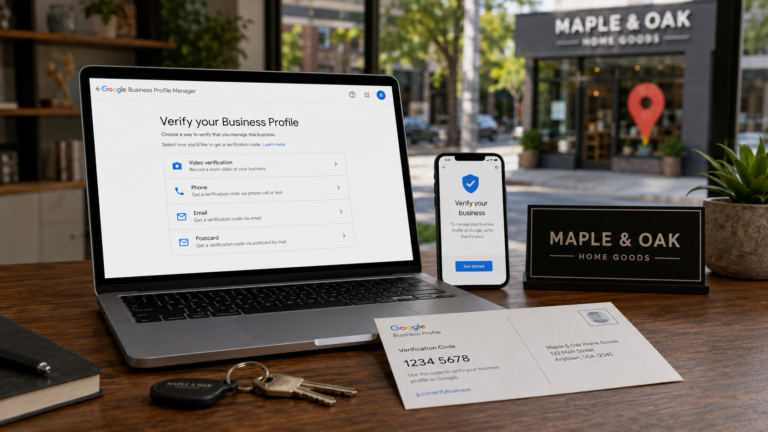
That means your service pages, location pages, Google Business Profile, and directory listings should tell a consistent story. If your website says you serve ten cities but your other profiles mention only three, your signals get weaker. If your page targets one service in one city, supporting content elsewhere on the site should reinforce that expertise.
The local landing page strategy guide mistake to avoid
The biggest mistake is mass-producing thin pages just to chase map visibility. It is tempting because it feels efficient. In practice, it often creates low-value content that is hard to maintain, hard to rank, and easy for competitors to beat.
Another mistake is targeting pages your business cannot support operationally. If you create a strong page for a city that is too far away to serve well, you may get leads that turn into bad customer experiences. Rankings are not the finish line. Profitable service delivery is.
There is also a technical side to this. Weak page speed, poor mobile usability, indexing issues, or broken calls to action can drag down performance even if the content is solid. Local landing pages do not work in isolation. They depend on the health of the site around them.
How to prioritize the right pages first
If you are not sure where to start, keep it practical. Begin with the markets that matter most to revenue and are closest to your current footprint. Then compare search demand, competition, and your ability to stand out.
For many small businesses, the first wave of pages should cover the top three to ten locations that already produce jobs or have strong growth potential. That gives you enough surface area to win without creating a content pile you cannot manage.
After launch, watch what happens. Which pages attract impressions? Which ones get clicks but no leads? Which ones convert well but barely rank? Those patterns tell you whether the problem is content, authority, user experience, or targeting.
At Nautical Agency, this is where local SEO gets more predictable. Instead of guessing, you can build around measurable demand, improve the pages that show traction, and expand only when the foundation is working.
Measuring success beyond rankings
A page that ranks but does not generate calls is not doing its job. A page that brings in the wrong leads is not doing its job either. The real test is whether local pages contribute to revenue through qualified traffic and clear conversion paths.
Look at phone calls, form submissions, direction requests, and service-area visibility together. Also watch engagement signals such as time on page and bounce patterns, but do not let vanity metrics lead the strategy. A page with lower traffic but strong lead quality may be more valuable than a page with more visits and weak intent.
It also helps to be patient without being passive. New local pages often need time, internal support, and authority signals before they reach full potential. That does not mean you publish and wait six months with no changes. It means you monitor, improve, and let the data guide the next move.
A practical standard for local page quality
If you want a simple test, ask this: would this page still make sense if search engines did not exist?
A strong local page should help a real customer understand where you work, what you do there, what makes your business credible, and how to contact you. If the page feels thin, repetitive, or vague, it probably needs more work. If it feels honest, specific, and useful, you are usually on the right track.
That is the heart of a strong local page strategy. Not more pages. Better pages, built for the places you truly serve and the leads you actually want.
If your business depends on getting found before a competitor, local landing pages deserve more than a city-name swap and a publish button. A little strategy upfront can save months of wasted effort later – and put your website to work in the markets that matter most.