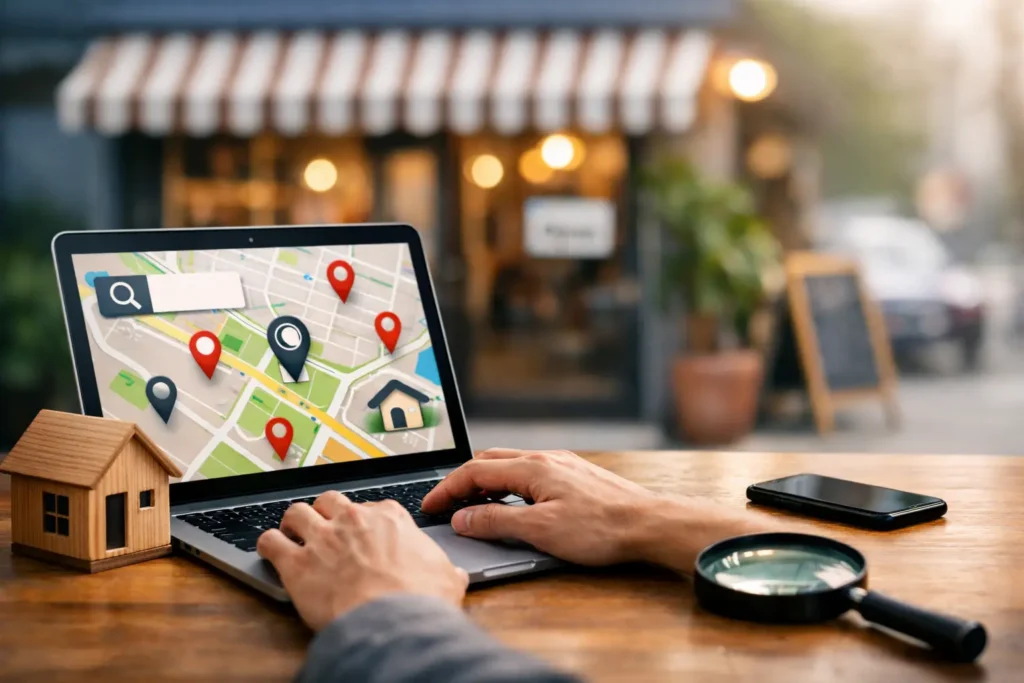
If your phone is not ringing from Google, there is usually a reason. A nearby competitor may have a better Google Business Profile, stronger location signals on their website, or more consistent listings across the web. Small business local SEO fixes those gaps so your company can show up when people in your area are actively looking for what you sell.
That matters because local search is not passive traffic. These are high-intent searches from people who need a service, want directions, or are ready to compare options fast. For a small business, better visibility in Google Search and Google Maps can turn into more calls, more form submissions, more direction requests, and more booked jobs without wasting money on broad marketing that reaches the wrong audience.
What small business local SEO actually includes
A lot of business owners hear “local SEO” and think it means adding a few city names to a homepage. It is much more than that. Done well, it is a system built around trust, relevance, and proximity.
Google wants to recommend businesses it can verify. That is why your Google Business Profile, website content, local pages, reviews, directory listings, and overall site health all work together. If one piece is weak, the rest can underperform. If several pieces are weak, you may barely appear at all.
For most small businesses, local SEO includes improving your Google Business Profile, tightening your service and location pages, making sure your name, address, and phone information is accurate everywhere it appears, earning quality local links, and tracking whether search visibility is producing real leads. None of that is flashy. All of it matters.
Why small business local SEO matters more than generic SEO
Broad SEO can target informational searches from anywhere. Local SEO targets people in your market who are close to taking action. That is a major difference.
If you are a roofer, dentist, med spa, law firm, HVAC company, or home service provider, you do not need random clicks from across the country. You need qualified local traffic from the towns and neighborhoods you actually serve. Local SEO helps Google connect your business to those geographic searches, especially the ones with strong buyer intent like “near me,” city-based terms, and service-specific searches in Maps.
It also helps level the playing field. A small business may not have the budget of a large regional brand, but it can still outrank bigger companies in local packs and localized organic results if its signals are stronger and more consistent.
Your Google Business Profile is not optional
For many local businesses, the Google Business Profile is the front door. Before someone ever lands on your website, they may see your reviews, hours, service categories, photos, service area, and business description inside Google.
A neglected profile can quietly cost you leads. Wrong categories, outdated hours, weak images, missing services, or inconsistent business information can reduce trust and hurt visibility. On the other hand, a fully optimized profile gives Google clearer signals about what you do and where you do it.
Reviews matter here too, but not in the simplistic way people often hear. More reviews can help, but relevance, recency, and response quality matter as well. A business with steady, authentic reviews and active profile management often performs better than one with a burst of reviews and then months of silence.
Your website still does the heavy lifting
A strong Google Business Profile helps you get seen. Your website helps you rank more broadly and convert that visibility into leads.
This is where many small businesses get stuck. They either have a dated site with thin service pages, or they think they need a full rebuild before doing SEO. In reality, many businesses can improve local performance without starting over. What matters most is whether your site clearly explains your services, supports the towns or service areas you target, loads properly, works on mobile, and gives Google clear location context.
Service pages should be specific. Location pages should be useful, not duplicated boilerplate. Contact information should be easy to find. And if you serve multiple cities, your site needs to reflect that with pages that match how people actually search.
There is a trade-off here. If you create dozens of weak city pages just to chase rankings, they often do not perform well and can dilute site quality. Fewer, stronger pages usually beat a stack of thin ones.
Consistency across the web builds trust
Google does not rely on your website alone. It also checks business directories, map platforms, local listings, and other mentions to confirm that your business information is legitimate and consistent.
If your business name appears one way on your website, another way on a directory, and your old phone number still lives on a third-party site, that inconsistency can create friction. It may not destroy your rankings on its own, but it weakens confidence.
This is why citation and directory cleanup remains part of effective local SEO. It is not glamorous work, but it helps reinforce your location signals and reduces confusion for both search engines and customers.
Local links still matter, but quality matters more
Links are still part of local authority. The key is earning the right kind.
For a small business, that might include local associations, chambers of commerce, sponsorships, community organizations, trade resources, or relevant business profiles. The goal is not to chase hundreds of low-quality links. It is to build credible signals that support your local presence.
This is where shortcuts can backfire. Spammy link tactics may create a short-term bump, but they can also create long-term risk. White-hat methods usually take longer, but they are more stable and better aligned with how legitimate businesses should grow online.
How to tell if your local SEO is actually working
A lot of business owners get monthly reports full of impressions and ranking screenshots, then still wonder whether marketing is helping the business. That frustration is fair.
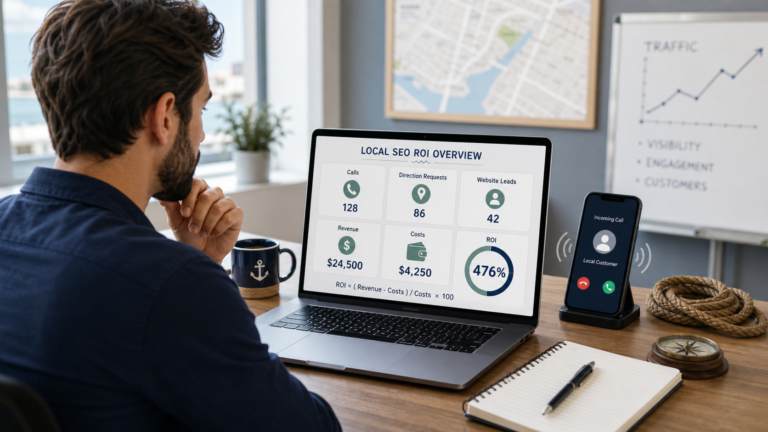
Good small business local SEO should connect to real outcomes. That means tracking calls, form submissions, direction requests, and lead sources so you can see whether visibility is translating into revenue opportunities.
Rankings matter, but context matters more. Ranking first for a low-value keyword is not a win if it does not produce leads. Ranking third for a high-intent local term that drives qualified calls can be far more valuable.
It also takes time. Some improvements, like Google Business Profile updates or citation corrections, can produce early gains. Competitive local markets usually require ongoing monthly work. If you stop after a few quick fixes, results often plateau.
The biggest mistakes small businesses make with local SEO
The most common problem is inconsistency. A business claims its profile but never updates it, adds a few keywords to the website but never builds location relevance, or pays for SEO without knowing what work is actually being done.
Another mistake is treating local SEO like a one-time setup. Search results change. Competitors improve. Reviews come in. Google updates profiles and ranking factors. Local SEO works best as an ongoing process, not a box to check once.
The third mistake is chasing vanity metrics. Traffic without leads is not enough. More visibility is only useful if it puts your business in front of the right local customers.
What to look for in a local SEO partner
If you are too busy to manage this in-house, that is normal. Most business owners should not be spending their evenings fixing citations or rewriting service area pages.
A good partner should explain what they are doing, why it matters, and how it ties back to leads. You should know whether they are optimizing your Google Business Profile, improving site content, building local authority, and reporting on meaningful performance. Transparency matters.
It also helps if the agency can work with your existing website setup instead of forcing a rebuild you may not need. For many small businesses, the right support is practical monthly progress, clear communication, and senior people who actually do the work. That is the kind of approach agencies like Nautical Agency are built around.
Small business local SEO is not about gaming Google. It is about making your business easier to find, easier to trust, and easier to contact when local customers are ready to act. If your competitors are showing up and you are not, the opportunity is still there. The right work simply needs to happen consistently.